02Treatment
Dental implantswith Dr. Hana Whitlock, Prosthodontist
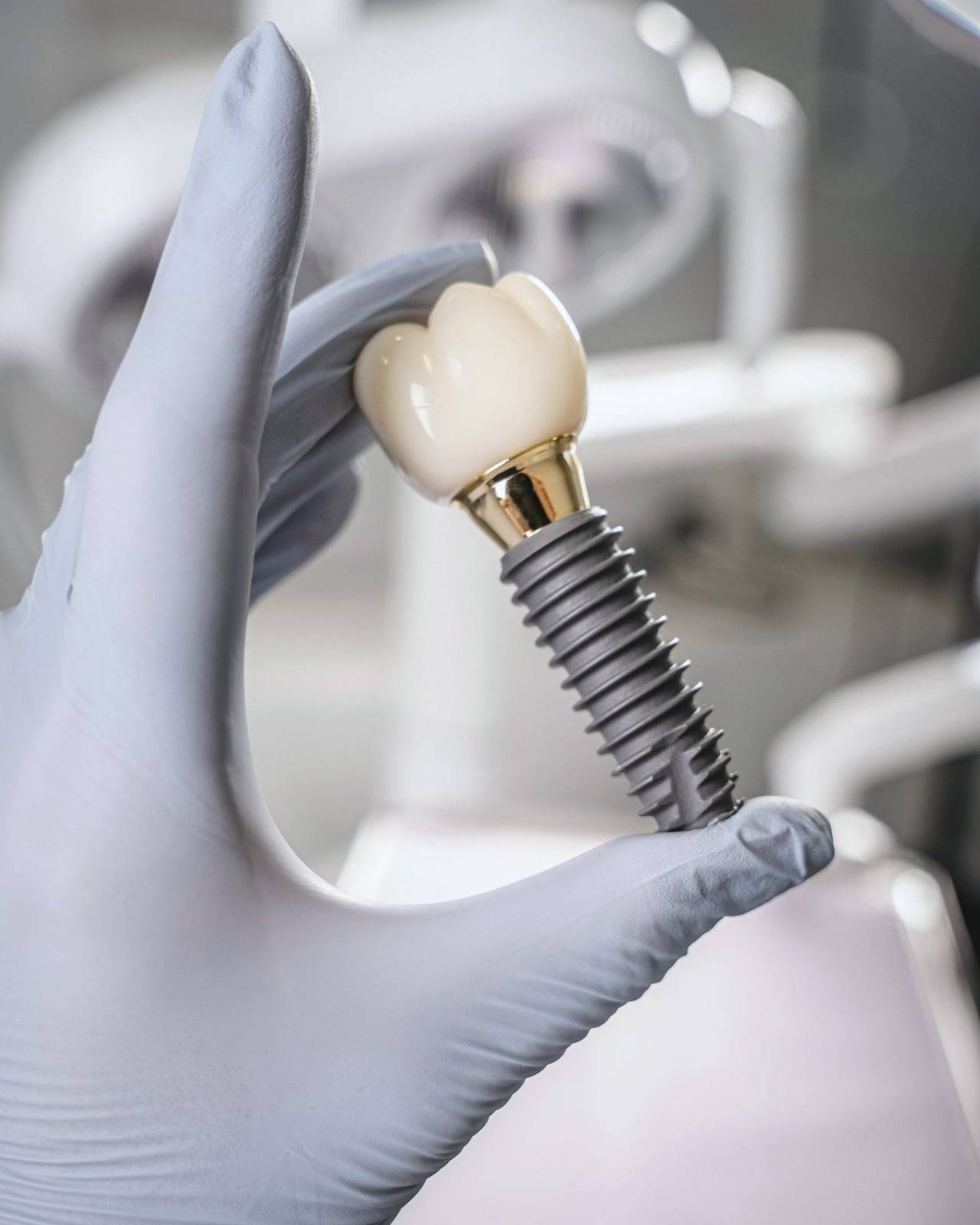
An implant replaces a missing tooth from the root up. A small titanium post is placed in the jawbone, the bone grows around it over a few months, and a porcelain crown is fixed on top. It doesn’t rely on the teeth either side, which is the main difference from a bridge.
- From
- $4,300per tooth
- Time
- 4–5 visits over 3–6 months
What it involves
Usually three to six months from placement to the final crown, over four or five visits. Most of that time is healing.
- 1
3D X-ray and plan
A cone-beam X-ray shows the bone in three dimensions. The implant’s position is planned on screen around the crown it will carry, and you get the plan and price in writing.
- 2
Place the implant
Under local anesthetic, the post is placed through a small opening in the gum. Most people go back to work the next day. We talk through sedation options at the plan visit.
- 3
Heal
Two to four months while the bone bonds to the implant. A front tooth gets a temporary in the meantime, so you never leave with a gap where it shows.
- 4
Fit the crown
A scan of the healed implant, then a porcelain crown shaded to your other teeth, screwed or bonded in place and checked against your bite.
What it costs
From $4,300 per tooth. Your fee comes in writing at the consultation, before anything starts.
- The “from” fee covers
- Placing the implant, the connector (abutment) and the porcelain crown, with the visits in between.
- May add to it
- A 3D cone-beam X-ray ($250), taking out the old tooth, a bone graft, or a temporary tooth while the implant heals.
- What changes the fee
- The bone where the tooth was, how many teeth are replaced, and whether a graft is needed.
- About this fee
- This is a minimum fee: charges may be higher depending on the treatment you need. It applies to treatment planned between November 1, 2026 and June 30, 2027. The consultation is free and is never added to it.
Paying over time is possible: how financing works.
Risks and limits
- It’s surgery: expect some swelling and tenderness for a few days. Infection and nerve injury are rare, and we explain the risks for your case before you decide.
- An implant can fail to bond with the bone. If it does, it is removed and, once healed, usually placed again.
- Smoking, uncontrolled diabetes and some medicines raise the risk; tell us about them at the plan visit.
- An implant needs brushing, flossing and check-ups like a natural tooth; gum disease can affect it.
Who it suits
One or more missing teeth with healthy gums and enough bone, or a graft to build it up. A bridge or a partial denture may suit better if surgery isn’t right for you.
Other ways to get there
- A bridge, a false tooth held by crowns on the teeth either side, done in about two weeks.
- A partial denture, removable, and the lowest cost to start.
Questions
Is the 3D X-ray part of the free consultation?
No. The consultation itself is free. If an implant looks right for you, the cone-beam X-ray is $250, quoted in writing before it’s taken.
Who places the implant?
Dr. Whitlock plans, places and restores implants herself, so one dentist is responsible from the first X-ray to the final crown.
Will insurance pay for an implant?
Some dental plans pay part of it, up to the plan’s yearly maximum. We check your plan and show what it may cover on your estimate.
See your plan before you decide.
A free 45-minute consultation: a 3D scan, the options on your own teeth, and the fee in writing.